






Bill comes amid focus on Sen. Mitt Romney and impeachment, but lawmaker says it isn’t to target him.
SALT LAKE CITY — A Utah lawmaker has filed a bill to allow Utahns to recall an elected United States senator.
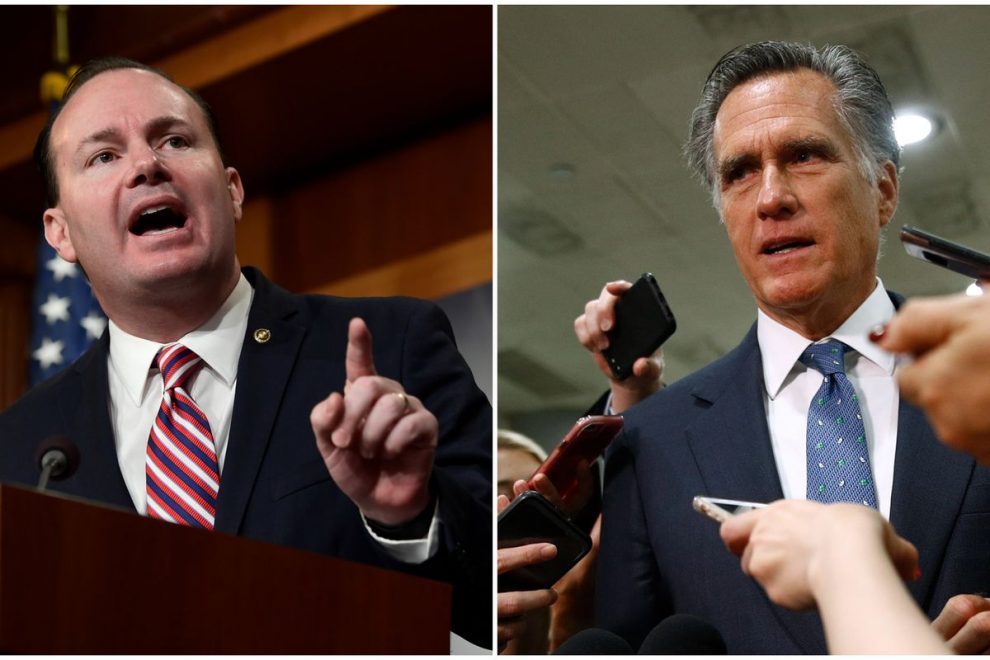
The lawmaker, Rep. Tim Quinn, R-Heber City, told the Deseret News in an interview Wednesday shortly after the bill was made public that it’s not meant to target any specific sitting Utah senator — but it comes amid heightened national attention on Sen. Mitt Romney, who has been among the few Republican senators publicly critical of President Donald Trump.
Romney in recent days has ignited simmering controversy over whether to bring additional witnesses and documents into the impeachment trial against Trump. Yet Quinn said his bill isn’t aimed at Romney or any specific senator — though he acknowledged his bill comes at a time that people will likely construe it that way.
“I know that’s what’s going to be the narrative,” Quinn said. “If it were, then it might make sense to have a sunset on it. That would not be the case.”
Breaking: Holdout Juror in Lindsay Clancy Trial Issues First Statement: ‘I Didn’t Have Any Doubts’
Juror who blocked Lindsay Clancy verdict disputes fellow jurors’ claims: report
Incumbent GOP Rep Attacks Trump for Enforcing Immigration Law in ‘Stunning’ Campaign Ad
ICE deports ex-Liberian fighter accused of torture, recruiting child soldiers
Trump’s EPA reforms are a huge boost to manufacturers, but there’s more red tape to cut: expert
Mike Huckabee calls out Macklemore on antisemitism: ‘Voice’ of ‘Jew hatred’
Hasan Piker Doubles Down on America Hate, Says US Bigger Terror Group Than Al-Qaeda
Federal Judge Refers Soros-Funded DA for Criminal Prosecution After Finding ‘Credible Evidence’ He ‘Violated the Law’
Minnesota-based UnitedHealthcare overbilled Medicaid by $47 million, federal audit finds
Trump DOJ official downplays antitrust concerns about companies coordinating AI safety development
Unearthed clip exposes what ‘DEI Queen’ in razor-thin House race thought of ‘Back the Blue’ law
Hasan Piker gives Democrats their latest headache after calling US ‘worse’ than al Qaeda
House GOP lawmaker under fire by fellow Republicans after ad bashing Trump on immigration
WATCH: Gaffe-prone Seattle socialist mayor cuts off police chief in yet another awkward interview
Texas Air National Guard pilot ejects safely before F-16 crash in Michigan
Rather, Quinn said he started drafting the bill “weeks and weeks ago” after some constituents came to him raising ideas of how Utah could return to a “pre-17th Amendment” time, or when U.S. senators were appointed rather than elected.
To Quinn, a six-year term for a senator is a lengthy term, and his bill would be a “good mechanism in place to make any senator, current or future, a little more accountable to those who elected him or her.”
“Six years is a long time,” he said.
Pressed on the timing of the bill coinciding with heightened attention on Romney, Quinn said he started drafting the bill long ago, and it just happened to be ready Wednesday.
“Obviously I didn’t open this bill file after he made some of that news with impeachment, it would have never been drafted this quickly,” Quinn said. “So I can understand why people might think that, but if they understood the legislative process, this was well before that.”
The bill, HB217, would establish a process for legal voters to petition through signature gathering to place a question on the ballot to recall a U.S. senator.
It would require signatures equal to 25% of the number of active voters in the state on Jan. 1 immediately following the last regular general election. If that threshold is met, the lieutenant governor would place the recall question on the ballot of the next election that occurs at least 90 days after the question is certified.
Breaking: Holdout Juror in Lindsay Clancy Trial Issues First Statement: ‘I Didn’t Have Any Doubts’
Juror who blocked Lindsay Clancy verdict disputes fellow jurors’ claims: report
Incumbent GOP Rep Attacks Trump for Enforcing Immigration Law in ‘Stunning’ Campaign Ad
ICE deports ex-Liberian fighter accused of torture, recruiting child soldiers
Trump’s EPA reforms are a huge boost to manufacturers, but there’s more red tape to cut: expert
Mike Huckabee calls out Macklemore on antisemitism: ‘Voice’ of ‘Jew hatred’
Hasan Piker Doubles Down on America Hate, Says US Bigger Terror Group Than Al-Qaeda
Federal Judge Refers Soros-Funded DA for Criminal Prosecution After Finding ‘Credible Evidence’ He ‘Violated the Law’
Minnesota-based UnitedHealthcare overbilled Medicaid by $47 million, federal audit finds
Trump DOJ official downplays antitrust concerns about companies coordinating AI safety development
Unearthed clip exposes what ‘DEI Queen’ in razor-thin House race thought of ‘Back the Blue’ law
Hasan Piker gives Democrats their latest headache after calling US ‘worse’ than al Qaeda
House GOP lawmaker under fire by fellow Republicans after ad bashing Trump on immigration
WATCH: Gaffe-prone Seattle socialist mayor cuts off police chief in yet another awkward interview
Texas Air National Guard pilot ejects safely before F-16 crash in Michigan
Under the bill, an incumbent senator would not be subject to recall if the senator has not been in office for at least one year of his or her current term.
Quinn said he sees the bill as a “good compromise between pre- and post-17th Amendment” that contains a fitting standards to meet for a recall.
“I think it’s a fairly large hurdle,” Quinn said. “That’s a lot of signature gathering. So it’s not something that people would take lightly if someone ever did want to recall a sitting senator.”
However, it’s unclear whether Quinn’s bill is even constitutional.
The U.S. Constitution does not provide for recall of any federally elected officials. While some states have statutes to allow voters to recall members of Congress, the U.S. Supreme Court has not yet ruled on whether that’s constitutionally legal at the federal level.
However, a close legal precedent may be a 1995 Supreme Court ruling that decided states did not have the right to impose new term limits on federal officials, noted Adam Brown, a BYU political science professor.
Breaking: Holdout Juror in Lindsay Clancy Trial Issues First Statement: ‘I Didn’t Have Any Doubts’
Juror who blocked Lindsay Clancy verdict disputes fellow jurors’ claims: report
Incumbent GOP Rep Attacks Trump for Enforcing Immigration Law in ‘Stunning’ Campaign Ad
ICE deports ex-Liberian fighter accused of torture, recruiting child soldiers
Trump’s EPA reforms are a huge boost to manufacturers, but there’s more red tape to cut: expert
Mike Huckabee calls out Macklemore on antisemitism: ‘Voice’ of ‘Jew hatred’
Hasan Piker Doubles Down on America Hate, Says US Bigger Terror Group Than Al-Qaeda
Federal Judge Refers Soros-Funded DA for Criminal Prosecution After Finding ‘Credible Evidence’ He ‘Violated the Law’
Minnesota-based UnitedHealthcare overbilled Medicaid by $47 million, federal audit finds
Trump DOJ official downplays antitrust concerns about companies coordinating AI safety development
Unearthed clip exposes what ‘DEI Queen’ in razor-thin House race thought of ‘Back the Blue’ law
Hasan Piker gives Democrats their latest headache after calling US ‘worse’ than al Qaeda
House GOP lawmaker under fire by fellow Republicans after ad bashing Trump on immigration
WATCH: Gaffe-prone Seattle socialist mayor cuts off police chief in yet another awkward interview
Texas Air National Guard pilot ejects safely before F-16 crash in Michigan
“Applying that logic, it’s questionable whether a state law could allow early removal of a federal official,” Brown said. “If states can’t apply term limits to federal officials, it would be a stretch to think they could end a federal official’s service early.”
Neither Romney nor Sen. Mike Lee — both sitting in on impeachment proceedings — were available for comment Wednesday, according to their staff.
Story cited here.


