





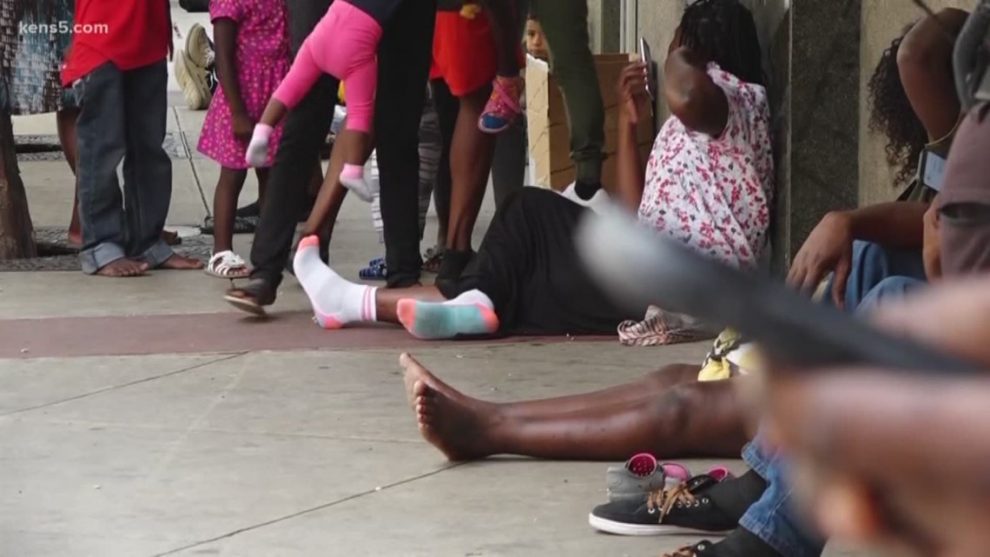
San Antonio officials scrambled this week to find French-speaking volunteers to help with hundreds of Congolese migrants arriving in the Alamo City.
“We didn’t get a heads up,” Interim Assistant City Manager Dr. Collen Bridger told KEN 5 after a group of 350 Congolese migrants arrived in the city unexpectedly. “When we called Border Patrol to confirm, they said, ‘yea another 200 to 300 from the Congo and Angola will be coming to San Antonio.’”
Bridger told the local CBS affiliate that they are looking for volunteers who can speak French. “If you speak primarily French and can come spend six, seven, eight hours, that would be really helpful,” Bridger explained.
The City of San Antonio apparently expected to be able to move the Congolese migrants along to Portland, Maine. “When we reached out to Portland Maine they said, ‘Please don’t send us any more. We’re already stretched way beyond our capacity,” Bridger stated. Instead, the City is now attempting to locate other localities that will accept these migrants.
South and central African migrants began illegally crossing the South Texas border on May 30 when 117 migrants from the Republic of the Congo, the Democratic Republic of the Congo, and Angola crossed in the Del Rio Sector. By June 5, more than 500 African migrants had crossed illegally in this single Border Patrol sector, Breitbart News reported.
Middle school teacher arrested in alleged prostitution scheme at casino hotel
Stranded hikers cling to steep California mountain ridge as helicopter crew swoops in
Longtime Serbian leader Vucic’s defeat at the hands of student movement leaves Washington in awkward position
Watch: El-Sayed Staffer Lets His True Feelings About Americans and the Muslim Brotherhood Slip in Devastating Undercover Video
DHS suspends visa-free travel program for Chinese nationals amid birth tourism, security concerns
Germans Furious After Audi CEO Teams with Trump to Announce New Georgia Plant
The Hitchhiker’s Guide to why removing Ilhan Omar from Congress could be harder than Trump expects
Billionaire with Epstein ties emerges as top Dem donor bankrolling ads weaponizing disgraced financier’s files
Utterly Incompetent WNBA Faces Potential Championship Game Disaster – Was it Because DEI Staff Failed to Book Stadium?
Powerful: Video Shows Grieving Mom Offer Illegal Alien Trucker Forgiveness Over Son’s Death: ‘I Pray for You’
Have You Seen Him? Police Search for Murderer Who Escaped Tennessee Prison
Breaking: Comey Charged for Reportedly Leaking National Security Secrets in 2016
Not even sky high gas prices or the Iran war will stop Trump supporters voting MAGA
James Comey charged with leaking national defense information
DOJ seeks to prosecute Comey over alleged national defense disclosure
In a press call on Wednesday afternoon, Brian Hastings, U.S. Border Patrol Chief of Law Enforcement Operations, told reporters this was the first large group “ever recorded in Border Patrol history solely from Central and South Africa. We’ve never seen that demographic in a large group of that size before.”
Two weeks before the illegal crossings began in the Del Rio Sector, hundreds of African migrants gathered near an international bridge in Nuevo Laredo, Tamaulipas, to protest not being allowed entry into the U.S. through a legal port of entry, Breitbart News reported. The group complained that Cuban migrants are being given preferential treatment.
Since that time, multiple groups of African migrants, mostly family units, crossed in the same area in large numbers. On June 5, agents apprehended another group of 34 African migrants bringing the total to more than 500 in less than a week.
“The introduction of this new population places additional burdens on processing stations, to include language and cultural differences,” Del Rio Sector Chief Patrol Agent Raul L. Ortiz said in a written statement. “Our agents continue to meet each new challenge as the ongoing humanitarian crisis evolves.”
Story cited here.


